


What is Accounting Meaning
Accounting is the systematic process of recording, analyzing, and reporting financial transactions to provide insights into a company's financial health. It involves maintaining accurate records, preparing financial statements, managing taxes, and enabling data-driven decision-making for stakeholders. Key types include financial, managerial, cost, tax, and forensic accounting.
Core Aspects of Accounting
- Recording Transactions: Bookkeeping tasks include maintaining the general ledger and recording daily financial activities.
- Financial Reporting: Producing key documents like balance sheets, income statements, and cash flow reports to show financial performance.
- Compliance: Ensuring financial records comply with rules like Generally Accepted Accounting Principles (GAAP).
- Analysis & Advice: Utilizing data for forecasting, tax planning, and improving profitability.
Key Accounting Types & Uses
- Financial Accounting: Prepares external reports for investors, creditors, and regulators.
- Management Accounting: Focuses on internal reports for managers to make decisions and plan, according to QuickBooks.
- Tax Accounting: Manages compliance with IRS codes, tax returns, and liability.
- Cost Accounting: Analyzes fixed and variable costs to improve efficiency.
- Forensic Accounting: Investigates financial records for fraud, legal, and criminal cases.
Key Accounting Roles & Opportunities
- Entry-Level Positions: Staff Accountant, Accountant I, Audit Associate, and Tax Associate are ideal for starting a career.
- Specialized Roles: Forensic accountant, tax consultant, and IT auditor.
- Bookkeeping & Support: Accounting Assistant or Clerk, often requiring less formal education.
- Certification: Certified Public Accountants (CPAs) are in high demand for public accounting and regulatory compliance.
Accounting Skills
Essential accounting skills include a mix of technical proficiency (software, tax law, GAAP), analytical thinking, and attention to detail to ensure accurate financial reporting. Key competencies involve mastering QuickBooks, Excel, and AI tools, alongside skills in forecasting, risk management, and communicating financial data effectively to stakeholders.
Core Technical Accounting Skills
- Accounting Software & Technology: Proficiency in software like QuickBooks, Zero, and ERP systems, including AI-powered tools for efficiency.
- Financial Reporting & Analysis: Preparing and analyzing balance sheets, income statements, and cash flow statements.
- Tax Knowledge: Understanding local, state, and federal tax laws, regulations, and compliance.
- General Ledger & GAAP: Maintaining accurate records, including knowledge of Generally Accepted Accounting Principles (GAAP).
- Budgeting & Forecasting: Projecting future financial performance and managing resources.
Key Soft Skills & Competencies
- Attention to Detail: High accuracy in data entry and reviewing financial records to prevent errors.
- Analytical & Critical Thinking: Evaluating complex data, identifying trends, and solving problems.
- Communication: Explaining complex financial information clearly to non-financial team members.
- Time Management & Organization: Managing tight deadlines, tax filing dates, and multiple projects.
- Integrity & Ethics: Maintaining confidentiality and adhering to ethical standards.
Emerging and Specialized Skills
- Commercial Awareness: Understanding business strategy and how the business operates to act as an advisor.
- Forensic Accounting: Investigating financial discrepancies and fraud.
- AI Familiarity: Using AI for automated data entry and advanced analytics.
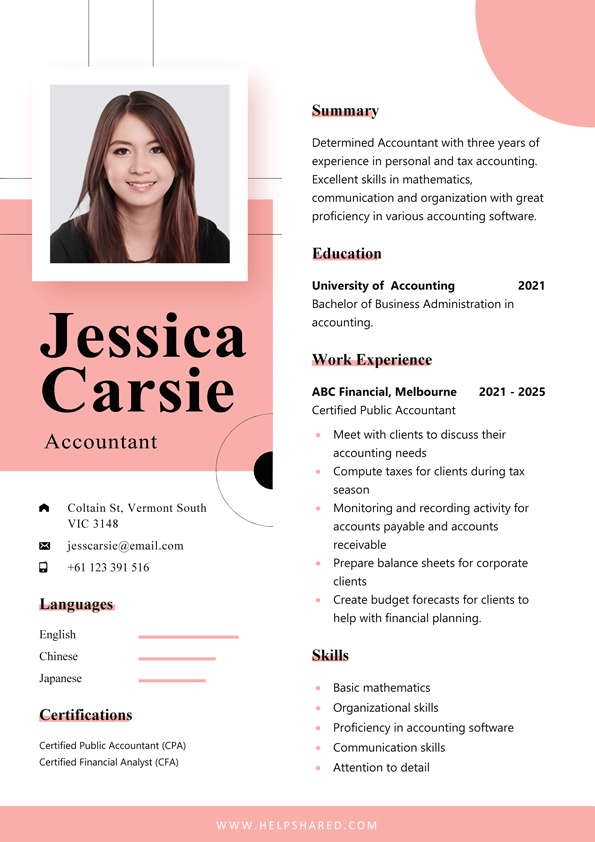
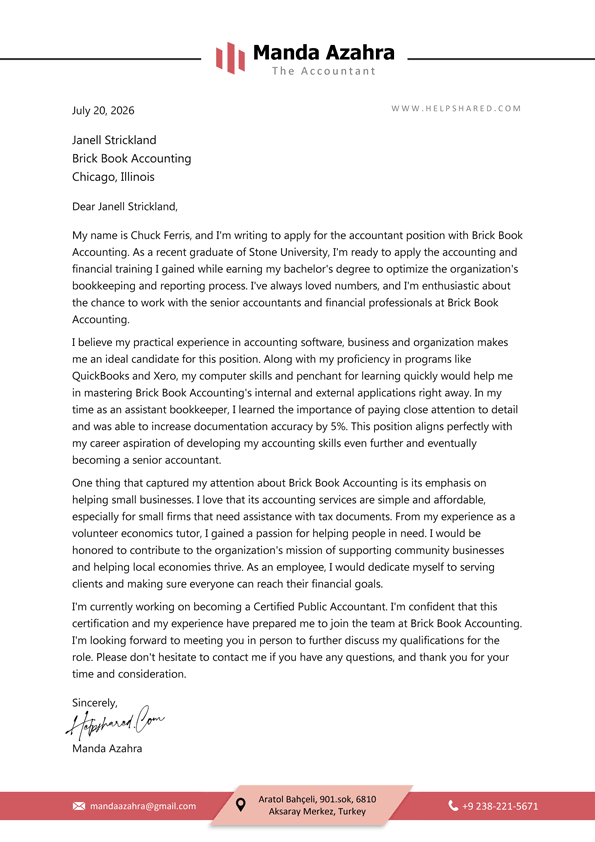
Resume and Cover Letter Template examples
Free Resume and Cover Letter for An Accountant or Accounting, plus template and writing examples for your job Application.
Cover Letter for an Accountant
DOWNLOAD:- Resume-14.Docx
- Resume-14.Pdf
More Cover Letter template examples
Accountant Cover Letter
DOWNLOAD:- Cover-letter-18.Docx
- Cover-letter-18.Pdf
More Cover Letter template examples


